0:00
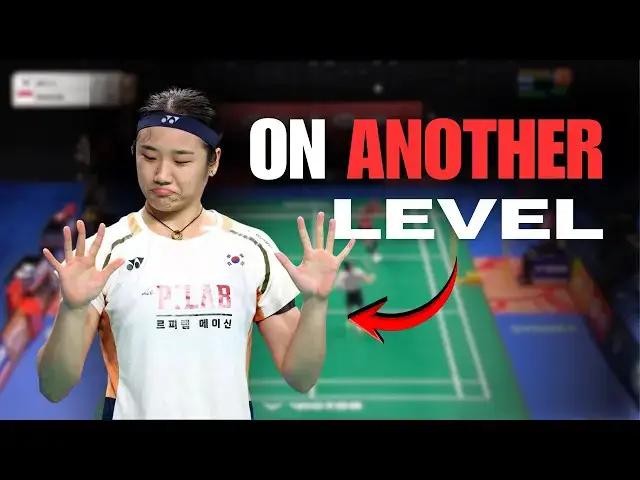
At the recent 2025 Australia Open, Anie
0:03
Young just secured her 10th title of
0:05
this year. But what's so important about
0:07
this tournament is not that she won the
0:09
title or the fact that it's her 10th
0:11
title of the year. It's the fashion in
0:29
History is made. Done. It the first
0:33
winning singles player to win the French
0:37
With score lines like these, it makes
0:39
you wonder what makes her so good and
0:41
how can one even beat her. In this
0:44
video, we will explain exactly that. But
0:48
in order to properly break down how to
0:50
effectively beat her, we need to start
0:52
with what makes her so good.
0:57
If you guys have watched Anie Young play
0:59
before, you might have noticed that she
1:01
plays a rather unorthodox women's
1:03
singles. In fact, her style of play is
1:05
very similar to men's singles.
1:08
Being one of the fastest women's singles
1:10
players on the circuit right now, Ani
1:12
Young aims to play a faster flatter
1:14
style with the goal of pushing the pace
1:18
You can see this right off the bat with
1:28
Well, bigger lead than she's had in a
1:32
Compared to a traditional women's single
1:34
serve, Anie Young chooses to use the
1:37
backhand short serve.
1:39
On top of this, she also pushes her
1:42
serve deeper into the court, which will
1:45
often force her opponent to reply back
1:49
During the rally, an seyou young will
1:51
also play further into the court to
1:53
prevent her opponents from playing the
1:55
net and to keep them stuck in the back
1:58
By playing faster shots that travel
2:00
farther into the court, Ani Young limits
2:02
the angles of return her opponents can
2:06
This allows her to move smoothly on
2:07
court and essentially anticipate certain
2:10
shots that her opponents might play.
2:21
And during her game against Wardini,
2:23
she capitalized a lot by pushing Wardini
2:26
into her late corners and keeping her
2:28
stuck there. And whenever Ordini wanted
2:30
to slow the pace of the game down, An
2:32
Sei Young would be ready to capitalize
2:34
on her clear and change the pace.
2:38
Also notice how Anu Young doesn't try to
2:40
force a full powered smash, but instead
2:43
she plays more for accuracy, angle, and
2:50
So Anie Young will choose to play the
2:51
higher percentage shot being the half
2:54
smash and look for her next opportunity
3:06
By focusing on the placement and her
3:09
follow-up, Anie Young can force her
3:11
opponent to play a faster game and
3:15
And that's essentially what happened
3:17
during this game against Wardi.
3:20
Any young would play a faster rhythm and
3:22
faster shots like drives, flat pushes,
3:24
and clears to limit Wardeni shots like
3:26
her fast drops and push her out of her
3:28
comfortable rhythm, thus ultimately
3:30
making Wardi make more unforced errors.
3:34
In fact, in the first game alone, Anc
3:37
Young's 21 points were made up of eight
3:40
of Wardi's unforced errors.
3:44
And that alone says a lot about how Anie
3:47
Young's shot speed and overall pace of
3:49
the game was tough for Wardy to deal
3:53
And this is the same with her game
3:55
against Ratchin where Ratchinox's game
3:57
was riddled with mistakes.
3:59
I wonder if she has that.
4:02
And this is how Enay Young can produce
4:03
such absurd score lines. By focusing on
4:06
her shot, she can force her opponents
4:09
into a faster rhythm, making them play
4:11
more unforced errors while minimizing
4:16
Ansu Young's shot speed and her shot
4:18
selection also helps her anticipate what
4:20
shots her opponent will play next,
4:22
allowing her to change pace on the next
4:24
shot and retrieve better as well.
4:40
However, this isn't to say that a faster
4:42
men's single style is superior to a
4:44
women's single style. Otherwise, all the
4:46
other women's singles players would
4:49
The reason Anu Young can make this style
4:51
work is due to many factors.
4:56
The first factor to talk about are her
4:59
This lays the foundation for pretty much
5:01
everything else that she can pull off in
5:04
Having strong legs allows Ani Young to
5:06
push the pace of the game and also makes
5:08
up the other half of her retrieving
5:12
With this, she can make her opponent
5:14
feel the need to rush their shots while
5:16
simultaneously capitalizing on these
5:21
For example, a shot that is difficult to
5:24
deal with is the flat push to the
5:28
In many rallies, Ani Young would choose
5:30
to push this corner in hopes of getting
5:32
her opponent to perform many body turns.
5:35
But if her opponent plays this shot back
5:38
to her, Ani Young is able to jump out
5:40
and attack the shot rather than turning
5:42
her body and taking an awkward around
5:47
The second factor is her shot quality.
5:50
And Su Young's style relies
5:51
significantly on her shot quality to be
5:53
near perfect. the moment her shot is a
5:56
little bit loose or not as fast, her
6:00
opponent can capitalize.
6:03
Number one, that you know, you have to
6:05
play your best shots to be able to win a
6:08
So, all of these points of the Korean
6:11
game complement and build on each other
6:13
so well that it makes her almost
6:17
That brings up the question, how does
6:21
To answer this, we need to take a look
6:24
at how players played when she lost. We
6:27
can first take a look at how Yamaguchi
6:28
played against Anza Young in the 2025
6:34
A strategy that worked well for
6:35
Yamaguchi was to attack the net, taking
6:38
it early and playing a deceptive shot
6:41
that still keeps the pace of the game
6:44
These deceptions were not necessarily
6:46
the same as the fast to slow pace
6:48
changes like the ones we saw Ginting do
6:50
against Mimo, but rather ones that focus
6:53
more on changing direction and getting
6:55
Ani Young to move the wrong way first.
6:59
By doing this, Yamaguchi breaks Ani
7:03
Young's rhythm, which is crucial to
7:05
scoring points on her.
7:10
Great play from Yamaguchi. She's in
7:12
control of this point. Other players
7:14
that Ani Young has struggled with are
7:15
Chen Yu Fay and Tai Su Ying. While these
7:18
players don't have the speed like
7:20
Yamaguchi to take every shot so early,
7:23
they have the suddenness and accuracy in
7:24
their backcourt shots that can
7:26
completely dismantle Ani Young's
7:30
A crucial part of both these women's
7:32
games that made it difficult for Ani
7:33
Young to play is their ability to
7:35
generate power at the last second of
7:37
contact with the shuttle.
7:40
By doing this, Titsuying and Chenyu were
7:43
able to add much more deception and
7:46
unexpectedness in their shots, which is
7:48
essential to beating an opponent that is
7:51
very stable on court like Ani Young. But
7:53
what all of these players did well
7:55
against Ani Young was that they all sped
8:00
In a sense, it's kind of like pitting
8:01
Ani Young's play style against herself.
8:04
The reason why you must speed up your
8:06
shot speed is to make it more difficult
8:07
for Ani Young to control her shots
8:10
because Ani Young's play style and
8:12
exceptional rhythm on court rely heavily
8:14
on her shot quality. So, if these
8:16
players can somehow speed up their shot
8:18
speed and force the world number one to
8:20
reduce her shot quality, then they have
8:23
a much better shot at winning.
8:26
So, even though the world number one
8:28
women's singles player seems absolutely
8:29
unbeatable the past season due to a
8:32
range of many factors that aid her game
8:34
exceptionally well, she isn't
8:38
Players like Yamaguchi and Chenu Fay
8:40
have been able to beat Ani Young in the
8:42
past year and have done so by either
8:44
playing extremely fast or by having more
8:47
suddenness in their swing, becoming more
8:49
deceptive to break Aniong's rhythm.
8:53
So, who do you guys think has the best
8:54
shot of beating Ani Young in the World
8:56
Tour Finals? Let us know in the comments
9:00
If you guys like this video, make sure
9:02
to hit the like and subscribe button so
9:04
you don't miss out on new content.
9:07
And as always, thanks for watching.
9:10
Young becomes the first woman