0:00
One of our most longtime requested
0:02
videos was to do one about Malaysian
0:04
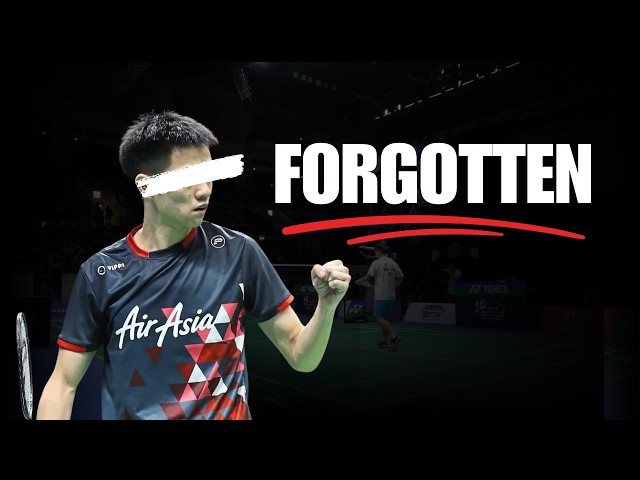
men's singles player Darren Louu.
0:10
This is a player that first really
0:11
caught the world's attention when he
0:13
nearly upset the goat of badminton, Lind
0:15
Dan, at the 2012 Thomas Cup. And after
0:19
that match, Darren Louu continued to
0:22
show promise where he later won the 2012
0:24
French Open and beat notable players
0:26
like Chotian Chen and Victor Axelson.
0:28
Unfortunately, however, it would seem
0:30
that Darren did not reach his full
0:33
Aside from a brief resurgence in 2018
0:35
when he made it to the World
0:36
Championship semi-finals, Darren's
0:38
highest rank peaked at 10 and only
0:40
lasted one week before his ranking
0:42
plummeted in the next few years. And
0:44
after more injuries, he eventually
0:46
retired and is now coaching Lee Zj.
0:53
First, we can look at what made Darren
0:54
Lu so good. What people will notice
0:57
immediately when watching Darren play is
0:59
how smoothly he moves on court.
1:02
With this smoothness comes extremely
1:03
good power generation. If you ever
1:06
watched him play, you'll see that his
1:08
smash, drives, and pushes have some of
1:11
the fastest shot speed on the circuit
1:13
and is very difficult for his opponents
1:19
Really, really well. Fast, furious,
1:22
attacking to perfection.
1:30
This is especially the case when you
1:31
also consider how sudden his power
1:32
generation is. What Darren is really
1:35
good at is holding a very relaxed state
1:37
and then suddenly hitting an extremely
1:40
fast shot out of the blue. If you can
1:42
keep your hitting motion the same across
1:43
both soft and fast shots like Darren
1:45
Lou, it becomes exceptionally difficult
1:47
for your opponent to punish you. They
1:49
can't just stand at the net waiting for
1:51
a drop or net because they have to
1:53
respect the smash and pushes. And as
1:56
long as the drop and nets have decent
1:57
quality, they can't just stand at the
1:59
back either. This is what a lot of
2:01
opponents who face Darren Louu
2:03
experience. They have to be extra ready
2:06
for the out ofthe- blue fast shots,
2:09
which means they're often not able to
2:10
punish the front court as much as they
2:12
want and will often stand further back.
2:18
This opens up the front court a little
2:20
>> which is why you'll see that Darren Lou
2:22
is usually the one attacking
2:46
Now, the problem with Darren is that he
2:48
lacks the explosive power in his
2:50
footwork. Even though he can get the
2:52
attack, there's no guarantee that he'll
2:54
be able to kill it. This is how many top
2:56
players strategize against him. They're
2:58
not so worried about hitting the shot to
3:00
the back court as Darren may not even
3:02
attack it in the first place. And if he
3:05
does, his follow-up is not particularly
3:07
quick for a pro player.
3:11
Thus, many players beat Darrenlu really
3:14
just through outring him and making him
3:16
tired. The delayed push off in Darren's
3:18
recovery and split steps often make him
3:21
take the shot lower and gives
3:23
opportunities for his opponents to take
4:30
And this lack of explosive power also
4:32
affects Darren's defense.
4:34
The Malaysian's defense often feels like
4:36
it's in slow motion, while other top
4:38
players have more instantaneous
5:32
In the following clip, for example, you
5:34
can directly compare Darren and Lee
5:36
Chongwei's backhand defense. Lie Chong
5:39
Wei feels much more instant, while
5:41
Darren has a dragging feel.
5:50
And because of this weakness in his
5:51
footwork, Darren ends up becoming an
5:56
Darren's skills set himself up well to
5:58
be an attacking player, but his
6:00
physicality cannot support it. This puts
6:02
him in a situation where he's forced to
6:04
constantly play better and better shots
6:06
to win the rally. The more you try to
6:08
pin the lines or play an even more
6:09
unexpected shot, the more likely it is
6:11
for you to make mistakes. You'll see
6:14
this happen a lot with Darren.
6:16
Darren Lou will often end up in
6:18
positions where it's difficult to smash,
6:21
but he ends up forcing it anyway because
6:24
any other shot will drag on the rally.
6:27
He puts full power into every shot to
6:29
make it hard for his opponents, but that
6:31
also leads him to hit out very often.
6:48
Big big surprise that
6:57
there's a compound effect here where
6:59
using full power all the time makes
7:01
Darren more tired and being more tired
7:03
will lead to even more mistakes.
7:06
This is why there are so many times
7:08
where Darren would do well against a top
7:11
player in the first set, but ultimately
7:14
lose the match. There's just no more gas
7:22
Darren needed just one more attribute
7:25
that's on par with top players to truly
7:27
compete. And in our eyes, it would have
7:29
been more explosive footwork.
7:32
People often compare him to Lie Chongwe
7:35
given their similar movements, but
7:37
Darren is missing the physicality part
7:39
that Li Chongwe worked so hard to
7:47
If there was a more targeted focus on
7:49
building resilience and capability to
7:50
move, Darren may have had a higher peak.
7:54
Injuries around the calf and hamstring
7:56
are what led to a downfall in Darren's
7:58
performance after 2013 and 2014.
8:04
>> without knowing his training program or
8:05
anything behind the scenes, it's hard to
8:08
say what exactly he needed to do.
8:10
>> But for us as individuals, it's
8:12
important to spend more time on fixing
8:14
our specific issues than blindly
8:17
following someone else's program.
8:23
If you like this video, make sure to hit
8:25
the like and subscribe button so you
8:27
don't miss out on future content. Let us
8:29
know what you would like to see next in
8:30
the comments below. And as always,