0:00
one thing we had gotten asked previously
0:01
were tips on moving to the late forehand
0:03
corner for example what to do when your
0:05
opponent plays a very fast push towards
0:08
your forehand Corner this is definitely
0:09
a situation that many players including
0:12
ourselves struggle with so we definitely
0:14
wanted to make a video on it and after
0:16
studying the pros for hours here's what
0:20
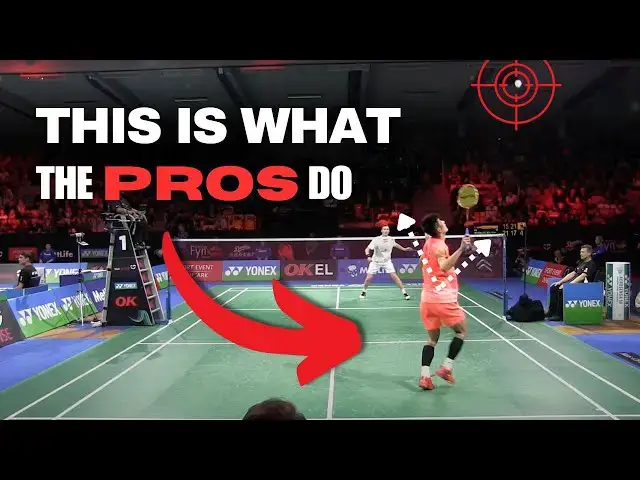
found before you think about anything
0:22
else you need to make sure you play with
0:24
your racket leading what this means is
0:26
that your first instinct when your
0:28
opponent hits the shuttle is to bring
0:29
your racket up as much as you can you
0:32
should prevent your opponent from being
0:34
able to play super flat pushes against
0:36
you it does not matter how fast your
0:38
footwork is if you're letting these
0:39
super fast kill likee pushes fly past
0:42
you the only way to get them is to have
0:43
your racket ready and extend your arm
0:45
right away to intercept the shot you
0:47
need to force your opponents to push
0:49
higher than where you can
0:50
reach once you can do that then we can
0:53
talk about footwork the tournament is
0:58
a one of the problems we noticed the
1:00
most in many players with troubles
1:01
moving to their late forehand corner is
1:03
they don't push using both legs they
1:05
either only use their right leg or only
1:07
use their left leg to push off when you
1:10
look at Pros like Lee Chong way or Lind
1:11
Dan however you'll see them pushing off
1:18
all men singles the late forehand
1:21
movement that people have the most
1:23
problem with is when their dominant leg
1:25
is in front of their non-dominant leg
1:27
when moving to the late forehand from
1:31
you need to First push with your
1:32
dominant leg to turn and then push again
1:35
with your non-dominant leg into a
1:37
shuffle or crossover now a key thing to
1:40
realize is that this is not a basketball
1:42
pivot movement where one leg is anchored
1:44
to one position you need to push
1:46
backward with your initial turn and
1:48
instantly push off your non-dominant leg
1:50
if it helps you can try practicing with
1:52
bigger slower movements at the start
1:54
start by doing a 180° jump backward and
1:57
when you land instantly push off your
2:00
leg into a shuffle or crossover movement
2:02
when you master this initial push off
2:05
everything else becomes so much easier
2:15
unbelievable in addition to the push off
2:17
we should also talk about when to
2:19
shuffle and crossover as well as provide
2:21
some tips on recovery the short answer
2:23
is everything is situational shuffles
2:25
are generally better suited for quick
2:26
movements while crossovers are better
2:28
for moving further distances
2:30
for example if the shuttle lands around
2:32
the double service line or it's a
2:34
flatter shot you can cut off shuffles
2:36
are generally better for that situation
2:39
on the other hand if the shuttle flies
2:41
higher and further back and you're
2:42
moving a further distance crossovers are
2:45
an effective movement to move far and
2:47
save energy additionally many players
2:49
will combine a crossover with a small
2:51
Shuffle to find the perfect timing for
2:53
hitting the shuttle some players also
2:55
use the liow step where they essentially
2:57
do a small hop on their non-dominant leg
2:59
before hitting it all depends on the
3:04
situation as for Recovery the same can
3:07
be said it's all situational depending
3:09
on the shot you choose to play generally
3:11
you should always recover one step
3:13
toward the middle right after you hit
3:15
but where you move next and how you do
3:17
so depends on what you just did if you
3:20
opt for fast shots like drives you
3:22
should usually bring your dominant leg
3:23
forward and follow up right away most
3:25
returns are either blocks or drives that
3:27
you have to prepare fast for and if your
3:29
opponent Rifts you should already be in
3:31
position to jump and attack the same
3:33
concept goes for cross drops and slices
3:36
you'll generally want to bring your
3:37
dominant leg forward and follow up right
3:39
away due to the far distance you have to
3:42
cover on the other hand if you choose to
3:44
play a straight drop you can keep your
3:46
dominant leg back and glide if you want
3:48
in anticipation of a lift clears are
3:51
another scenario we can discuss if you
3:53
play a high clear you can generally walk
3:55
back to the middle and prepare for
3:57
defense for flatter punch clears many
3:59
players will opt to shuffle though you
4:01
could also use running steps it really
4:03
just depends on your preference and what
4:05
allows you to move more smoothly and
4:16
easier hopefully these few tips were
4:18
helpful and gave you ideas on how to
4:20
improve your footwork to your late
4:21
forehand to summarize make sure you
4:24
start by preparing to hit right away and
4:26
in many cases cutting off the shot
4:28
whenever you can by simp simply
4:30
extending your racket once you do that
4:32
practice your split step and make sure
4:34
you use both legs to move to your late
4:37
forehand the initial push should be a
4:39
small hop and turn that lets your left
4:41
leg instantly push off then it becomes
4:44
all situational your final movements
4:46
toward the corner depend on how fast and
4:49
far the bird travel and your movements
4:51
away from the corner depend on what shot
4:55
play If you like this video make sure to
4:57
hit the like And subscribe button so you
4:59
don't miss out on our future content let
5:01
us know what you would like to see next