0:00
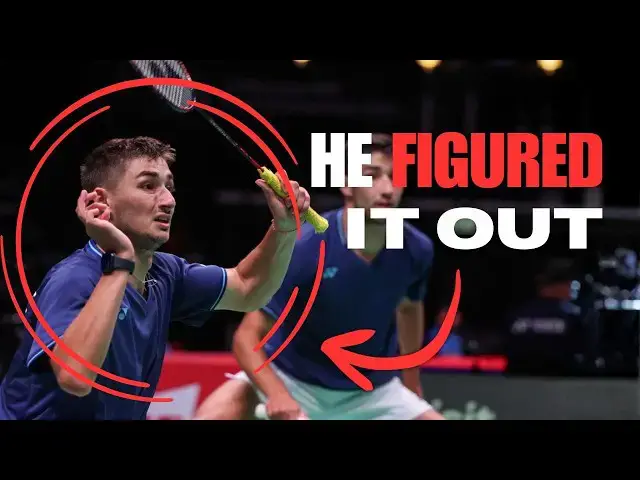
One standout player from the recent
0:02
French Open has been Christo Pakov who
0:04
beat quite literally half of the Chinese
0:06
Taipei men's singles team and the former
0:09
world number one Kunovit Viditsarn to
0:11
reach the finals of a super 750.
0:15
It's safe to say that he played
0:16
extremely well that week. But actually
0:18
his success hasn't been limited to this
0:19
tournament alone. In fact, in this year,
0:23
out of 17 tournaments, excluding the
0:25
European Mixed Team Championships,
0:27
Christo Popoff has made the quarterfinal
0:29
stage or past that in 10 of them. That's
0:32
well over 50% of the tournaments and
0:34
explains his top 10 placement in the
0:36
World Rankings. So, what's the secret?
0:38
How does Kristo consistently make it far
0:40
in so many of these World Tour
0:42
tournaments? So, in this video, we want
0:45
to analyze Kristo's game and break down
0:47
how he is able to stay consistent as
0:50
well as what prevents him from winning
0:51
these titles. Pressure from Anton.
1:06
The first thing that you might notice
1:08
when watching Kristo play is that he
1:10
retrieves very well. And this is due to
1:12
his exceptional rhythm on court. But
1:16
what ultimately aids his rhythm on court
1:18
is his choice of shot. Kristo being both
1:21
a singles and doubles player chooses to
1:24
play more of a flat game with his
1:25
opponents like drives and blocking
1:28
further into the court. And this
1:30
directly aids Christo's rhythm. This is
1:32
important because one major flaw in
1:33
Kristo's game is that he struggles
1:36
against players who can break his
1:37
rhythm. These are players who have very
1:39
good holds and deceptions at the net and
1:42
and players who can change the pace of
1:44
the game within the rally extremely
1:52
So by playing a doubles style in
1:54
singles, he doesn't give his opponents
1:56
the opportunities to hold or play
1:58
deceptions. And in a way, they are
2:01
dragged into Kristo's rhythm. This is
2:04
because when Christo plays drives or
2:07
blocks further into the court, the shot
2:09
speed is much faster, which forces his
2:12
opponents to take the next shot right
2:14
away rather than allowing them to hold
2:16
first. So now Christo can play in his
2:20
You can see that when opponents play
2:22
into Christo's pace on the court, it
2:24
becomes very difficult for them to play.
2:26
At this pace, Kristo can stay very
2:29
consistent and avoid unforced errors,
2:32
whereas his opponent may find it more
2:34
challenging to play as the pace might be
2:36
faster or slower depending on who they
2:41
So, unless Christo's opponents can out
2:43
rally him at his own pace, then they
2:46
must do something extra to change the
2:48
pace, like a shot combo, for example.
2:51
And usually this means more unforced
3:02
Another characteristic that is quite
3:04
unique to Kristo is his ability to
3:06
change his shot in defense. This skill
3:09
is extremely important in singles, but
3:11
it might be seen more and practiced more
3:14
in doubles play. The ability to change
3:16
your shot and defense is so important
3:18
because it essentially prevents your
3:20
opponent from being able to effectively
3:22
change the pace with shot combos that
3:25
involve following up after a downward
3:27
shot. Smash and followup is one of the
3:30
most commonly practiced drills in
3:31
badminton. And it's no wonder that these
3:33
professionals would smash and
3:35
immediately start moving towards the
3:37
front. It's in their muscle memory. So
3:40
Kristo's ability to change his defensive
3:42
shot from a straight block to a cross
3:44
block, cross lift, straight lift, etc.
3:47
is so important in preventing his
3:49
opponents from changing the pace on him.
3:52
As Kristo wants to stay in his comfort
3:54
zone, for example, we can look at these
3:57
rallies and pay attention to how
3:59
Christo's opponent struggles to follow
4:01
up because of Christo's change of shot
4:18
Super discipline. Any singles discipline
4:21
out of your opponent, get them out of
4:23
position. Then that's when you go for
4:37
by bringing doubles play into his
4:38
singles game, Kristo is able to play
4:40
towards his rhythm by playing faster
4:42
shots like drives and blocks that travel
4:44
further into the court, which gives his
4:46
opponents less time to hold and play
4:48
deceptions. And by preventing his
4:50
opponents from changing the pace through
4:52
his change in defense, Kristo makes it
4:54
more difficult for them to play shot
4:56
combos to incite a pace change. Both of
4:58
these factors allow Kristo to stay
5:00
within his comfortable rhythm on court,
5:02
which enables him to play extremely
5:04
consistently. So, we've stated a lot of
5:07
good things about Kristo's game, but
5:09
what's holding him back from being the
5:14
The first aspect that we need to touch
5:15
on is Christo's lack of holds and
5:17
deceptions in both the front court and
5:19
the back court. When we watch Kristo
5:21
play, we notice that he would almost
5:23
always opt to hit the shuttle right
5:24
away. While this is by no means a wrong
5:27
thing to do if you're trying to push the
5:30
but it becomes readable for your
5:31
opponent and allows your opponent to get
5:33
used to your swing timing and shot
5:35
speed, which is not a good thing. Once
5:38
your opponent is used to your swing
5:39
timing and shot speed, they begin to
5:41
anticipate many shots and play much more
5:45
This is exactly what Anders Anton was
5:47
doing to Christo in the finals of the
5:49
French Open. Antonson capitalized on
5:51
Christo's lack of suddenness and pace
5:52
changes in both the front court and the
5:55
back court. You can kind of see it as a
5:56
double-edged sword. Because Kristo does
5:59
not play many holes or deceptions, he
6:01
himself isn't making that many unforced
6:03
errors because they might be more risky
6:06
to play, especially if they aren't
6:08
practiced well enough. But Kristo also
6:10
gives Antonson more feeling on the
6:30
So what we would like to see is if
6:33
Cristo can add some fast to slow pace
6:36
changes in the front court specifically
6:40
after flat exchanges as these could be
6:43
lethal weapons in breaking his
6:46
and winning the point. But there is one
6:48
more aspect that needs to be mentioned.
6:56
Earlier in the video, we stated that
6:59
Cristo played an extremely consistent
7:00
game if he played in his rhythm. So, it
7:03
might come as a surprise when we say
7:04
impatience is holding him back from
7:06
being the best. Because to be
7:08
consistent, you have to be patient. But
7:12
Crystal plays very impatiently and wants
7:15
to play full smashes or drives at the
7:18
net when his opponent is in a position
7:19
to counter. So even if he can stay
7:21
consistent for the long rallies, if he
7:24
makes quick and short mistakes in the
7:25
other rallies, then the majority of the
7:28
points still go to his opponent.
7:32
I think right. I thought it was going
7:34
wide at the center line.
7:36
As we said earlier in the video, Kristo
7:39
tends to struggle against players that
7:41
can break his rhythm. So, a large reason
7:43
why Kristo lost to Anders in the French
7:45
Open finals is because Anders is one of
7:48
those players who have extremely good
7:49
holds in both the back court and front
7:52
court. To win at the professional level,
7:55
being able to stay consistent at your
7:57
own rhythm is sometimes not good enough,
8:00
especially against players that can
8:01
match that consistency. So you need to
8:03
have a weapon that can break their
8:05
consistency and you have to be able to
8:08
sustain that high level of play
8:10
throughout the entire match and even the
8:12
entire tournament. That's what players
8:14
like Lee Chongi in the older era or Ansi
8:17
Young in the new generation are doing so
8:19
well. And Christo is also doing this
8:21
very well. Hence the consistency in his
8:23
results. But sometimes the errors leak
8:25
in a little too much which results in
8:28
tournament runs falling short of the
8:30
title. Do you guys think Crystal has
8:31
what it takes to reach top five in the
8:33
world? Let us know in the comments
8:35
below. If you guys like this video, make
8:38
sure to hit the like and subscribe
8:39
button. And as always, thanks for