live_tv
Livestream Starting Soon
00
Hours
:
00
Minutes
:
00
Seconds
Up next in 10

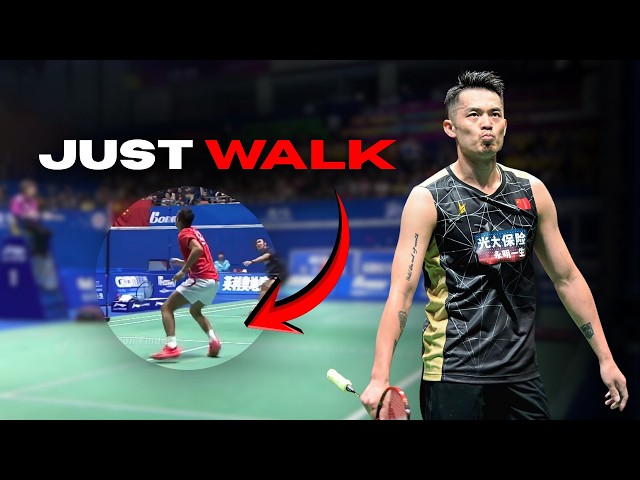
As the G.O.A.T. of badminton, Lin Dan's footwork is among the most commonly asked questions on this channel: "How can Lin Dan just walk on court?" This is definitely something we always wondered about as well because badminton footwork, particularly in singles, is always so tiring. Yet, Lin Dan makes his badminton footwork look so effortless. So in this video, we will point out key factors that allow the greatest badminton player of all time to walk on court.
🤝 Our Sponsors & Partners
Get Exclusive NordVPN deal here ⬇️ https://nordvpn.com/getgoodatbadminton
It’s risk-free with Nord’s 30-day money-back guarantee! ✌️
📚 Must-Read Books For Athletes
Rising Strong by Brene Brown ➡️ https://amzn.to/4cBFeAR
Ego Is The Enemy by Ryan Holiday ➡️ https://amzn.to/3GbhjvK
Can’t Hurt Me by David Goggins ➡️ https://amzn.to/3Y5YXm3
Atomic Habits by James Clear ➡️ https://amzn.to/3Y6xssC
The Power of Now by Eckhart Tolle ➡️ https://amzn.to/4lHAfmm
As an Amazon Associate, I earn commission from qualifying purchases.
📱 Check Out Our Socials
Check out our blog: https://getgoodatbadminton.com/
Facebook: https://www.facebook.com/getgoodatbadminton
Twitter: https://twitter.com/ggatbadminton
Instagram: https://www.instagram.com/getgoodatbadminton
Pinterest: https://www.pinterest.ca/getgoodatbadminton
Show More Show Less View Video Transcript
0:00
Since the start of this YouTube channel,
0:02
we've gotten a ton of requests for a
0:04
video on Lindan's footwork and
0:06
particularly how Lindan looks like he's
0:08
walking on court.
0:11
Anyone who has played this sport
0:12
competitively before knows just how fast
0:15
the game is and how hard we must work on
0:17
our physical to maintain long rallies.
0:20
Badmitten is known to be an extremely
0:22
physically demanding sport. But yet we
0:25
have someone like Lind Dan who not only
0:27
looks like he's just walking on court,
0:30
but he's doing it against some of the
0:32
best players in the world.
0:34
>> Very long.
0:38
>> So how does he do it? How can Lindan
0:40
just walk on court?
0:43
The simplest answer to why Lindan can
0:45
walk on court is because he has superb
0:47
shot quality and anticipation skills.
0:49
But we'll come back to this later. What
0:52
we first want to discuss is Lindan's
0:54
actual footwork movements and how they
0:57
differ from other players.
1:00
Lindan frequently uses what we'll refer
1:02
to as step footwork.
1:05
This is footwork where you're taking
1:07
walking steps or crossovers to move
1:10
around the court as opposed to what we
1:12
call glide footwork which involves more
1:14
shuffling and sliding your feet.
1:26
Neither footwork is strictly better than
1:28
the other.
1:30
They have individual characteristics
1:32
that make each better for certain
1:33
scenarios.
1:35
Step footwork is generally less tiring
1:37
and more efficient with the drawback
1:39
lying in its requirement to have
1:41
near-perfect split step timing.
1:44
The reason is because you take larger
1:46
steps that will let you get to various
1:48
corners and recover much more easily.
1:51
Walking steps tend to be the movement
1:53
that's much more natural to us and is
1:55
another reason why it's less tiring
1:57
compared to something like shuffling.
1:59
The downside with walking steps,
2:01
however, is that it's very unforgiving
2:04
when it comes to split [music] step
2:05
timing and shot quality.
2:08
If you mess up your shot and need to
2:09
split step unexpectedly, your footwork
2:12
will naturally look more choppy as you
2:14
scramble for the shuttle.
2:24
Shuffling and gliding, on the other
2:26
hand, is more forgiving if you mess up
2:30
your shot and need to push off earlier
2:33
or later than expected. This is because
2:35
your legs are generally always in a
2:37
loaded position ready to push off. Of
2:40
course, the cost is that you'll be more
2:42
tired as you're essentially holding a
2:44
half wall sit.
2:48
Shuffle movements themselves are also
2:50
more suited towards retrieving fast
2:51
shots close to you rather than covering
2:53
the full court.
3:00
You can keep these things in mind when
3:02
you watch the pros play and think about
3:04
why they move the way they do.
3:07
For example, a lot of players like to
3:10
use a little bit of a glide in their
3:11
recovery after playing a drop because
3:13
drops tend to be slower shots that their
3:15
opponents can change speed on.
3:18
By using a glide on your recovery, you
3:21
can keep your legs loaded and ready for
3:22
immediate pushoff. Here's another
3:25
example, but in the front court. If you
3:28
play a fast, flatter push, there isn't
3:30
always time for you to go through the
3:32
rhythmic walkback recovery.
3:35
Here you can see Lie Chongi shuffle
3:36
because he needs to be ready if his
3:38
opponents cut off the bird early, even
3:41
if the intention is for the opponent to
3:42
play a late [music] forehand.
3:45
Now that we're thinking about the shot
3:46
we play and how it'll affect our
3:48
movement on court,
3:50
>> let's look at what Lin Dan does to allow
3:52
him to move so effortlessly.
4:00
The key to Lindan's ability to walk on
4:02
court lies in his shot quality and
4:03
choice. Whenever you see Lindan walking
4:06
on court, it's usually after playing
4:09
clears, lifts, and pushes.
4:12
These are shots
4:14
that when played with high shot quality,
4:17
give you time to return to the middle,
4:19
often at a walking pace.
4:23
And that's really the key with Lindan.
4:26
As the goat of bad mitten, Lindan
4:27
undoubtedly has some of, if not the best
4:30
shot quality on the planet. Let's take a
4:32
look at his pushes and clears. For
4:34
example,
4:35
most of these shots are played at a
4:37
speed and height that not only make them
4:38
extremely hard to cut off, but also
4:41
limit the kinds of shots Lindan's
4:43
opponents can play.
4:46
As a general rule,
4:48
>> the faster a shot is,
4:51
>> the harder it is to take speed out of
4:53
it, and play a return with extremely
4:55
good control.
4:57
No player can consistently play a
4:59
deceptive stop drop off of Lindan's
5:01
pushes, nor do they want to, as slow
5:04
shots tight to the net are easy for male
5:07
players to attack when they're in
5:09
position. Returning shots will almost
5:11
always have to come back with some speed
5:14
and is a key part of why Lindan often
5:16
seems like he's walking on court.
5:20
The shuttle will pretty much always pass
5:22
the service line, which allows him to
5:24
position further back and get to clears,
5:27
drops, and smashes without a lot of
5:30
problems.
5:32
Compare this now to pushes from some
5:34
other players, which while may be fast,
5:37
they're often very flat [music] and can
5:39
be cut off. Thus, you'll also see that
5:41
the responding footwork is also
5:43
generally shuffle and gliding footwork
5:46
instead of walking steps. Essentially,
5:50
if you want to walk like Lin Dan on
5:52
court, you not only need to use walking
5:54
steps in your footwork, but you have to
5:56
play shots that give you time while
5:59
making it difficult for your opponent to
6:01
attack. It should be noted that Lindan
6:04
doesn't always walk and he doesn't
6:06
always hit the perfect shots.
6:09
He will make use of glides and shuffles
6:11
particularly when he plays drops,
6:12
drives, and nets because those shots and
6:14
what the opponent can respond with
6:16
require him to move much faster.
6:19
There are times when Lindan makes
6:21
mistakes as well where his clear or lift
6:23
isn't of the best quality [music] and
6:25
you can see his footwork gets scrambly
6:27
in these situations.
6:30
On a side note, that's also why Victor
6:33
Axelson had a good record against
6:34
Lindan.
6:36
Axelson is much taller than your typical
6:38
badminton player, even among the pros,
6:41
and can often cut off the shuttle much
6:43
earlier. This throws off Lindan's split
6:46
step timing and reveals some of the
6:48
problems with step footwork that you
6:50
should keep in mind if you're trying to
6:52
emulate Lindan's footwork.
6:59
Additionally, Lindan's ability to walk
7:01
on court also comes from his
7:03
anticipation skills.
7:05
Traditionally,
7:07
we're taught to return back to the
7:08
middle of the court so that we're ready
7:10
to cover the entire court. At a higher
7:13
level, however, we need to put more
7:15
emphasis on preparing for the most
7:17
likely or dangerous shot and learn to
7:21
anticipate your opponent's returns more
7:22
often.
7:25
Lindan can often walk or move at a
7:27
slower pace than what you think a pro
7:28
should be moving at because he's often
7:31
already standing at where his opponent's
7:32
return is.
7:34
Let's look at Lindan's defense for
7:36
example. Wherever Lindan lifts, he's
7:38
pretty much always hovering more towards
7:39
the side to cover a straight shot. This
7:42
is because the straight shot is the
7:43
fastest and most likely option, while
7:46
the cross shot is one that if you react
7:48
fast, can often cut off early and gain
7:51
the opportunity to counterattack.
7:56
Similarly,
7:58
watch where and how Lindan stands when
8:00
he plays highquality nets.
8:03
At certain placements, his opponent is
8:06
unable to play super flat pushes or
8:08
drives and is almost always forced to
8:11
lift or spin net.
8:14
Since a high lift is a slow shot that
8:16
Lindangan can get to pretty easily, he
8:18
will position to watch the net more
8:19
closely as any net is generally the
8:21
faster shot.
8:24
And because he is already standing close
8:26
to the net, he doesn't really need to
8:28
sprint forwards or anything to gain
8:30
control.
8:32
It is also important [music] to note
8:34
that the closer you look at Lindan's
8:35
footwork, the more you'll realize that
8:38
he isn't always casually walking on
8:39
court like we might think.
8:42
Lindan's feet are actually quite active
8:44
when he plays. For example,
8:47
when you watch Lindan's split step on
8:49
close-ups, he's not really standing flat
8:51
on the ground. He generally stays on the
8:54
balls of his feet and keeps his legs
8:56
loaded so he can instantly push off.
9:00
The same can be said when people refer
9:02
to him as waiting for the next shot.
9:05
He's not just standing in the corner
9:06
waiting [music] for the bird to come.
9:08
There are a number of small movements
9:10
that are really important in allowing
9:12
him to reach the next shuttle.
9:16
One particular thing to highlight is how
9:18
Lindan uses transitional steps where he
9:20
will make a foot adjustment to
9:22
reposition himself into a stance where
9:24
he can push off.
9:28
This is super important alongside
9:30
recovering your upper body so that you
9:33
don't get stuck in corners and it is why
9:35
Lindan can often afford to return to the
9:37
middle a little slower.
9:40
He is often already physically prepared
9:42
to push toward any spot on court.
9:45
It's a similar idea when we say walking
9:47
steps. We don't mean walking like you're
9:49
casually walking down the street.
9:52
In badminton, walking steps are still
9:54
active steps where you make long
9:57
strides, often with a little skip for
10:00
speed. Camera angles might make Lindan
10:03
seem slow, but he is still very fast.
10:06
>> No doubt what the tactic is. That's
10:11
now being able to walk like Lindan on
10:13
court right after seeing this video is
10:15
unrealistic, but there are lessons you
10:17
can take away and try to implement in
10:19
[music] your practice.
10:21
The first is a consideration of the
10:23
differences between step and glide
10:24
footwork [music] and how you can add
10:26
them to your game.
10:28
Gliding and shuffling are generally
10:30
movements that are more tiring,
10:32
especially when trying to cover long
10:34
distances on court, but they give you
10:36
more leeway for your split step in case
10:39
your opponent hits the shuttle
10:40
unexpectedly.
10:45
Step footwork, on the other hand, allows
10:48
you to move far greater distances
10:49
without expending as much effort,
10:51
>> but it requires very good [music] split
10:53
step timing, which in turn is heavily
10:55
reliant on you playing good shots.
10:59
Consider the shots you play and adjust
11:01
your footwork based on it.
11:05
Similarly, you should also look to
11:07
adjust your positioning on court based
11:09
on your [music] shot selection. Your
11:11
ultimate goal should be to limit your
11:13
opponents to just a few options [music]
11:15
with your shot and adjust your footwork
11:18
to cover just those options rather than
11:21
the whole court.
11:24
Of course, it's much easier said than
11:25
done, but having this intention during
11:27
your practice and play is the first step
11:28
to achieving your goals.
11:31
As always, if you like this video, make
11:34
sure to hit the like and subscribe
11:35
button so you don't miss out on future
11:37
content. Let us know what you want to
11:40
see next in the comments below
11:43
and thanks for watching.
12:02
>> [music]
#Sports
#Racquet Sports
#Sports Coaching & Training