0:00
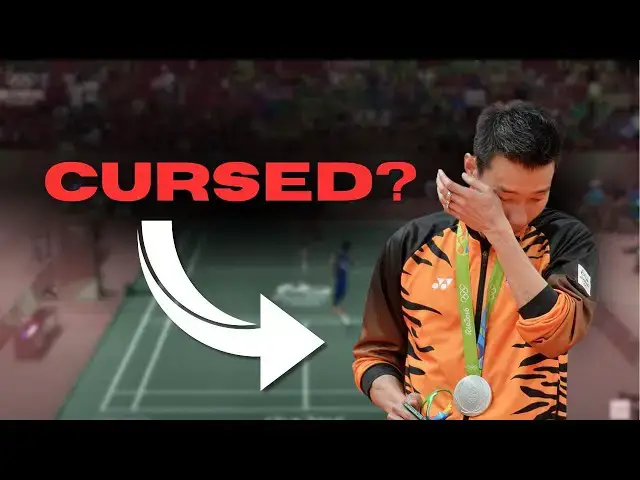
three silver Olympic medals, four silver
0:03
world championship medals. That makes
0:05
seven finals appearances where Lie
0:07
Chongwe failed to clinch the gold in a
0:09
major tournament, which is odd because
0:11
prior to these tournaments,
0:13
Lee Chongwe would always be dominating
0:15
in the World Tour. And it's not like he
0:17
has never beaten his opposition.
0:22
In fact, he actually leads in the
0:23
head-to-head against Chen Long, who he
0:26
has lost to twice in World Championship
0:28
finals and once in an Olympic final. If
0:31
it happens once, then it's maybe a
0:32
fluke. If it happens twice, it's
0:34
unlucky. But if it happens three or more
0:37
times, then there's a problem. Many
0:40
argue that it was due to a lot of
0:41
pressure and other mental factors that
0:43
inhibited the Malaysian. And this is
0:45
completely right. However, this is very
0:48
easy to say and only just scratches the
0:51
surface level. So, knowing this, we
0:54
wanted to study Lie Chongwei's shot
0:56
selection and how his play was
0:58
ultimately affected by nerves and mental
1:01
pressure. In this video, we will take a
1:04
deep dive into Li Chongwei's game and
1:06
point out the two factors that inhibited
1:08
the Malaysian from winning a major
1:16
Lee Chongwe had one of the best net
1:17
games of all time and this led to
1:21
But at major events, Lee Chongwe's skill
1:25
at the net might have been one of his
1:29
The reason why is because tight nets are
1:31
gambles. In a normal open tournament
1:35
where there isn't as much pressure, Lie
1:37
Chongi is willing to take this gamble
1:39
and outskill his opponent at the net.
1:42
When you play the tight net, you play it
1:45
with the intent of following up on the
1:49
because if your net is good, your
1:51
opponent is generally forced to play the
1:53
spin net or give a half court lift. If
1:56
your opponent plays the spin net, you
1:58
can brush it and secure a point. If he
2:01
gives a halfcourt lift, it's an easy
2:07
The problem, however, is that both the
2:08
tight net and the following shot is
2:10
difficult and risky to execute. If your
2:12
opponent hits a spin net that rolls off
2:14
the tape, it's 90% their point. And on
2:18
top of that, if your opponent takes the
2:20
shuttle earlier and plays a simple push,
2:23
you get pushed into your late back
2:31
In a tournament like the Olympics where
2:33
the pressure is on every single shot,
2:35
Lie Chongi is unable to execute these
2:38
risky shots to the best of his ability.
2:40
And we can probably safely assume this
2:43
for almost everyone. It's unrealistic to
2:46
expect yourself to be able to execute
2:48
shots in a high pressure tournament
2:50
scenario in the same way as you would in
2:53
training. This was very evident in these
2:55
rallies where he played Chenl Long in
2:56
the Olympics. Watch how Lie Chongwei
2:59
blocks tight to the net and Chen Long
3:01
just simply pushes Li Chongwe's
3:14
How did he get away with that le?
3:21
So why didn't he just stop playing these
3:25
The reason is because his style revolved
3:27
around his net play and Lee Chongwe was
3:30
not as well practiced in playing a style
3:32
that eliminated the net as players like
3:35
Chen Long and Lind Dan were. Think about
3:37
if you're in a tournament situation,
3:39
you wouldn't play shots you've never
3:41
practiced before, but instead you would
3:44
play what's most comfortable for you.
3:46
And for Lee Chungi, his confidence is in
3:51
But if he is unable to execute these
3:53
tight nets because of the pressure and
3:56
he chooses to play safer and block
3:58
farther, then he is ultimately playing
4:03
Hence, when you watch these rallies, Lie
4:06
Chongi is generally the one being
4:33
When you are being controlled on the
4:34
court, it means you are using your speed
4:36
and energy to chase the shuttle. This
4:38
will make you more tired, which often
4:40
leads to thinking that you have to end
4:42
the rallies more quickly to save energy.
4:45
Which leads us to our next point.
4:50
It doesn't matter how fit you are. If
4:52
you are doing more work than your
4:53
opponent, then you will become more
4:54
tired. And this is evident in Li
4:56
Chongwe. We can see this by looking at
4:58
shot combos. And when Lie Chongwei is
5:00
choosing to change the pace and
5:02
intercept the shuttle early, for
5:03
example, a common pattern that we saw Li
5:05
Chong play is after Chenl Long or
5:07
Lindaman block towards the middle, Li
5:09
Chongwe will block towards the side and
5:11
try to change pace on their push. Nice
5:41
While this may be a good time to inject
5:43
pace into the game depending on their
5:44
push quality, its drawback is that it's
5:47
very tiring to execute. When you block
5:49
toward the sides, the angle of their
5:51
return will be much greater. So more
5:53
often than not, you will be moving the
5:55
diagonal of the court. And on top of
5:57
running the cross, Lie Chongwei blocks
6:00
tight towards the sides. This means his
6:03
body must be positioned for a potential
6:04
net back from his opponents, even if he
6:07
is anticipating the push. So, Lie Chong
6:09
not only has to stay close to the net,
6:11
but he also has to cover the largest
6:14
angle from his opponent's push. And to
6:16
be able to change pace and intercept the
6:19
requires him to get behind a push that's
6:22
likely already traveled over his head.
6:24
You probably get the idea. This shot
6:26
combo is extremely tiring and physically
6:28
demanding to execute. So while we do
6:31
advocate changing the pace and attacking
6:33
these pushes, we also need to pay
6:35
attention to what time is right to
6:37
change pace. That's why many games Lee
6:39
Chongwe would actually lead at the
6:41
11-point interval because he would
6:43
simply exert energy to put pressure on
6:45
Chenlong. For example, in the Rio
6:47
Olympics final against Chenlong, he led
6:49
the first set 11 to7. But it's
6:50
inevitable that as you become more
6:52
tired, you start to become more
6:54
impatient and begin to make more
6:56
mistakes. These unforced errors come
6:59
from the mindset of wanting to finish
7:00
rallies quickly, which becomes more
7:03
apparent as one becomes more tired. In
7:05
many rallies, Lee Chongwe's shot
7:07
selection indicated that he wanted to
7:08
end these rallies quickly, which
7:11
ultimately led to unforced errors.
7:27
He's missed another one.
7:31
And yes, you should capitalize on these
7:34
shots like the late backhand and late
7:36
forehand, but it's not needed to always
7:39
play a winner on these shots. Trying to
7:42
force a winner on your shot is
7:44
ultimately what being impatient is. It's
7:46
more important to just recognize that
7:48
you should be there early and have the
7:50
mentality to continue pressuring your
7:51
opponent until they return a shot you
7:53
can guarantee a winner on. This works
7:55
because even if you are just playing a
7:56
simple block, your opponent will
7:58
generally be late when you're early and
8:00
you can continually stack up pressure
8:02
until your opponent cannot reach the
8:04
shuttle or play a shot that is 100%
8:10
In conclusion, the point of this video
8:12
was to answer the question of why Lee
8:14
Chongwe couldn't win a major title
8:16
despite dominating so hard in the
8:17
regular season and even leading in
8:20
head-to-head against his opponents. And
8:21
the answer is this. When Lee Chongwe was
8:24
at his absolute best, he was the best
8:27
player in the world. But how often can
8:30
you rely on playing at your best in
8:31
tournaments where the stakes are high?
8:33
This is ultimately what inhibited Lee
8:35
Chongwe from winning these major titles
8:37
because he wasn't as well practiced as
8:38
his opponents in a style that still does
8:41
well under extreme pressure. In a normal
8:43
tournament, you can see that Lie Chongi
8:44
was able to execute his style very well
8:47
because of how relaxed he was. The
8:49
moment the extra pressure is added in,
8:51
and now every single point counts, the
8:54
Malaysian would try to play less risky
8:56
and end up playing his opponent's game.
8:59
At the end of the day, these factors
9:01
that inhibited Li Chongwei from winning
9:03
a major title are easy to criticize as
9:05
viewers. But if we were on court
9:07
experiencing the same things, it would
9:10
be a different story. What do you guys
9:11
think? Do you guys think that Lee
9:14
Chongwe could have won the major titles
9:16
if he played at his absolute best? Let
9:18
us know in the comments below. If you
9:20
guys like this video, don't forget to
9:22
hit the like and subscribe button. And
9:24
as always, thanks for watching.