live_tv
Livestream Starting Soon
00
Hours
:
00
Minutes
:
00
Seconds
Up next in 10

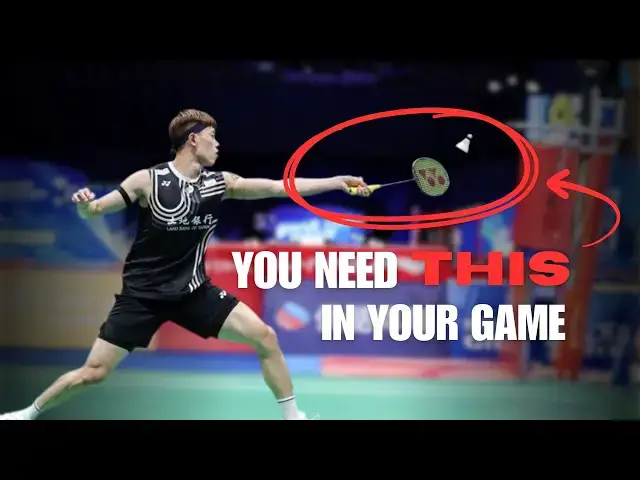
In badminton, there's many factors that contribute to the final outcome on the court, but a significant factor are the playstyles. Lin Chun Yi from Chinese Taipei and Li Shi Feng of China have quite an interesting head-to-head record, with Lin Chun Yi now leading 5-1. So in this video, we want to analyze why Lin Chun Yi is able to beat Li Shi Feng almost every time they play.
🤝 Our Sponsors & Partners
Get Exclusive NordVPN deal here ⬇️ https://nordvpn.com/getgoodatbadminton
It’s risk-free with Nord’s 30-day money-back guarantee! ✌️
📚 Must-Read Books For Athletes
Rising Strong by Brene Brown ➡️ https://amzn.to/4cBFeAR
Ego Is The Enemy by Ryan Holiday ➡️ https://amzn.to/3GbhjvK
Can’t Hurt Me by David Goggins ➡️ https://amzn.to/3Y5YXm3
Atomic Habits by James Clear ➡️ https://amzn.to/3Y6xssC
The Power of Now by Eckhart Tolle ➡️ https://amzn.to/4lHAfmm
As an Amazon Associate, I earn commission from qualifying purchases.
📱 Check Out Our Socials
Check out our blog: https://getgoodatbadminton.com/
Facebook: https://www.facebook.com/getgoodatbadminton
Twitter: https://twitter.com/ggatbadminton
Instagram: https://www.instagram.com/getgoodatbadminton
Pinterest: https://www.pinterest.ca/getgoodatbadminton
Show More Show Less View Video Transcript
0:00
At the 2025 China Masters, Lieuong of
0:03
China played against the left-handed Lin
0:05
Chuni. And it's safe to say that Lynchi
0:07
played exceptionally well.
0:10
But was it really his form that day that
0:13
allowed him to beat the higher ranked
0:15
opponent or was it something deeper than
0:17
that? So in this video, we want to
0:20
analyze why Lin Shuni is able to beat
0:22
Lieafong so easily.
0:25
eventually is doing here player in there
0:29
and say okay
0:30
look at that
0:31
has been lifted.
0:35
Before we start picking out things in
0:36
each player's play style that gives them
0:38
an advantage or disadvantage, we first
0:41
must lay the foundation by briefly
0:43
explaining both of their play styles.
0:46
Lieong's play style is extremely similar
0:48
to that of Chenl Long's. He plays a
0:50
counterattacking play style where he
0:52
pushes higher and aims to change to
0:54
attack by playing a good shot on
0:55
defense.
0:57
This style is extremely well suited to
0:59
players like Chenl Long and Lie
1:02
who have very good defense and are able
1:04
to cover the court extremely well
1:06
because of their reach and length in
1:08
their limbs. So by playing this style,
1:11
Lie Shaong utilizes his length to his
1:14
advantage and forces his opponent to
1:17
expend more energy than him by moving
1:19
them around the court and allowing them
1:21
to attack.
1:31
The longest run so far. Lynchron on the
1:34
other hand plays a simple attacking
1:36
style where he aims to take the net
1:37
early to set up opportunities for his
1:39
back foot. He is a very rhythmic player
1:42
who doesn't make use of many pace
1:43
changes but rather scores through deadly
1:46
attacking shots in the back.
1:48
Despite the two having similar looking
1:50
play styles,
1:51
there are minor differences that gives
1:53
Lin Chuni the upper hand in these
1:54
matchups.
1:59
Lieuong's play style is counterattack as
2:02
we mentioned before which is exactly the
2:04
edge that he gives Lynch Yi by waiting
2:06
for a counterattack opportunity. Lieong
2:08
immediately gives Lin Chun Yi the attack
2:10
in the rally. These high lifts that
2:12
Lieafong plays are not exactly the best
2:14
shots to play against a player like Lin
2:16
Chuni simply because of his ability to
2:17
end the rally with one shot. The high
2:19
lifts give too much time and allows
2:21
Linui to get two feet behind the shuttle
2:23
to jump smash. However, they would be
2:25
okay to play if Lieafong took the net
2:27
earlier. But this is because he can
2:28
threaten more shot options when he takes
2:30
the net higher.
2:33
But in these games, Lieong would take
2:36
the net very low and lift high, giving
2:40
Lin Chun Yi more than enough time to
2:42
finish the rally with a smash.
2:44
However, we need to see why Lieafong
2:46
takes the net so low when he plays
2:47
against Lin Chuni.
2:49
Because it is not in anyone's interest
2:51
to take the net lower when playing a
2:53
serious match. It's easy to see that
2:55
Linchi has an extremely good smash,
2:58
but another key strength that is
2:59
overlooked is actually his front court.
3:03
[Music]
3:08
Lynchini's front court is so deceptive
3:10
because of his ability to utilize his
3:12
fingers and wrist to keep his swing
3:13
short but quick. And on top of that, the
3:16
shot speed on his pushes are extremely
3:18
fast.
3:19
When you combine a deceptive short swing
3:21
and fast shot speed with how early
3:23
Lynchuni takes the shuttle at the net,
3:26
it becomes almost impossible to
3:28
anticipate what shot Lynchuni will hit
3:30
next.
3:31
This is why Lin Chongi can put Lee
3:33
Shaong into these late corners. And by
3:35
putting Lieafong into these late
3:36
corners, he can then set up for his
3:38
smash in the back court by doing one of
3:40
two things. The first, which Lin Chuni
3:43
didn't do much of, is anticipating the
3:45
clear. Anticipating the clear is very
3:47
good to do, but the reason why Lin Chuni
3:49
doesn't do it much against Lieong is
3:51
simply because Lieong does not play the
3:54
defensive clear at all. At the
3:56
professional level, where everybody has
3:59
a means to kill the rally, especially in
4:02
men's singles, playing a slow defensive
4:05
clear where your opponent can get two
4:07
feet behind the shuttle is essentially a
4:09
death trap. So, if they do play a clear,
4:12
it's more of a fast punch clear. And on
4:14
top of this,
4:16
professionals are almost never that late
4:18
to the shuttle that they have to play a
4:21
defensive clear. They are usually taking
4:24
the shuttle early enough that they have
4:26
some shot options. That's why many
4:28
players, Lieafong included, will opt to
4:30
play downward neutralizing shots.
4:32
However, this is where Lin Chuni is able
4:34
to set up for his back. If Lieafong
4:36
rarely clears, then there's no point in
4:39
anticipating the clear. That's why Lin
4:41
Chuni would anticipate the neutralizing
4:43
shot
4:45
[Applause]
4:49
and more often than not play a shot that
4:52
is tighter to the net to force Lieong to
4:55
stretch out to take the shot.
4:57
Of all, when Lieong is in good shape,
5:00
this brings us to a key issue Lieafong
5:01
has. Even though Lieafong has the same
5:04
counterattacking play style as Chenlong,
5:06
there is one major difference that
5:08
completely separates the two. From this
5:10
position, you can see Lieafong's first
5:12
issue. His shot quality on his
5:15
neutralizing shots in the late back
5:16
court.
5:18
Chenlong had near-perfect shot quality
5:20
on his neutralizing shots in the back
5:21
court, which made it extremely difficult
5:24
to capitalize on those shots. But here,
5:27
Lieafong's shot quality in the back
5:29
court can be taken advantage of. Not
5:31
only is it high above the net, but there
5:33
also isn't enough shot speed on it. That
5:36
is why Lincheni can capitalize by
5:37
holding first and then changing his
5:39
shot, playing deceptions, or by spin
5:42
netting and forcing the lift because he
5:44
is simply so early to the shuttle.
5:50
And speaking about Lee Fung shots in the
5:52
late backcourt, here's what the Chinese
5:54
coaches had to say. To sum it up, Sunjun
5:57
talked about two important points for
5:59
Lee Fun to focus on. The first is for
6:01
Lysa Fong to play a hard cross shot on
6:03
his late forehand, either being a drive
6:05
or clear. And the second is for Lisha to
6:08
not rush when taking the net. Because
6:11
Lynchi is left-handed, this cross shot
6:14
is extremely effective at neutralizing
6:15
the rally. This is simply because it's
6:17
difficult for Lin Chongi to capitalize
6:19
on the drive with his packet. The most a
6:21
player can do is drive or block back.
6:26
Another reason to play this drive is to
6:28
incite a further reply from Lin Chun Yi.
6:31
Because Lieuong's shot has a lot of shot
6:34
speed behind it, Lin Chuni's reply must
6:37
be a little further into the court. By
6:40
making Lin Chuni play further into the
6:41
court, Lie Shafong doesn't have to move
6:43
as far to take the net, which allows him
6:46
to speed up the pace of the game and
6:47
take the shuttle earlier. And playing
6:49
further into the court goes for his
6:51
front court as well. Lee Shifankan aimed
6:54
to block further into the court and play
6:56
flatter to force Lin Chuni to take the
6:59
shuttle right away instead of allowing
7:02
him to hold and play his shot first. And
7:04
by doing this, Lieong can eliminate the
7:07
threat of the tight net, which allows
7:09
him to focus more on his back court.
7:12
Once Lieong has sped up the game by
7:14
playing further into the court, he can
7:16
then move more freely on court as Lin
7:18
Chuni doesn't have as much time to hold
7:20
before his shots like he was doing here.
7:22
That was Sunjun's second point. By
7:24
staying more composed and not rushing
7:25
your footwork, Lieong can read through
7:28
Lin Chuni's deceptions and take the next
7:30
shot with more intention. Good
7:32
deception again. And he's he's moved
7:34
backwards.
7:37
To conclude, Lieong always loses to
7:39
Lynchi because of the pressure that
7:41
Lynchi applies in the front court with
7:43
his short, quick, and deceptive swing,
7:45
forcing Lieong to play towards his
7:47
weakness, his late back court. But what
7:51
Lisha could have done is try to
7:52
eliminate the tight front court by
7:54
focusing on playing shots with high shot
7:56
speed in the back court and by playing
7:58
further into the court in his front
8:00
court. Had he done this, the game might
8:02
have been a little bit easier. But in
8:04
the end, there's a reason Lee Funk plays
8:07
his high lift style, counterattack
8:09
style, because it's what he's good at
8:12
and comfortable doing. Ultimately, if
8:14
you try to force yourself to play a
8:16
style that you're unpracticed in or is
8:18
unfamiliar to you,
8:20
then it's entirely likely that you will
8:22
still end up losing and perhaps even
8:25
harder than before,
8:27
even if the strategy is better. So, in a
8:30
tournament scenario, it's important to
8:32
focus on what you know best and then
8:35
make adjustments to learn and fix
8:36
certain mistakes in your training
8:38
afterward. If you guys like this video,
8:40
make sure to hit the like and subscribe
8:41
button so you don't miss out on future
8:43
videos. Make sure to comment what you
8:44
guys want to see next. And as always,
8:47
thanks for watching.
8:49
[Music]
8:56
Heat. Heat. N.
9:05
[Music]
#Sports
#Racquet Sports