0:00
In the 2025 Indonesia Open, Anders
0:02
Antinson finally grabbed his first title
0:05
after coming up runner up at the same
0:07
tournament in 2024 and 2019.
0:12
Today, we're going to study his finals
0:13
match against Choten Chen and share some
0:16
ideas that you could implement in your
0:17
own gameplay. Let's jump right in.
0:23
To kick things off, it would be good to
0:24
talk about each player's strengths and
0:26
how they want to play. Chinchin is known
0:28
for his explosive movements where he
0:30
does an amazing job of jumping out and
0:32
attacking in the back court. Anders
0:34
Anson, on the other hand, is almost the
0:36
complete opposite. He rarely opts for
0:39
explosive jumpouts and smashes in the
0:41
back court and instead often plays to
0:44
win at the net. In his game against Cho,
0:47
Antonson was able to both play toward
0:49
his strengths and neutralize Cho's
0:52
strengths with a couple of strategies
0:53
alongside Cho's own mistake. Let's
0:55
actually start with Cho's mistake.
1:04
What immediately stood out to us in this
1:05
match was how often Cho lost at the net.
1:08
Cho blocked way too much to Antonson's
1:09
backhand corner, and we have no idea why
1:11
he opted for that shot so much. Yes,
1:14
getting your opponent to turn their body
1:16
as often as possible is advantageous,
1:19
but it's much more effective if you're
1:21
moving them from their forehand position
1:22
first. Chosen nets toward Antinson's
1:25
backhand were often played without
1:26
moving Antonson around first.
1:29
This problem is amplified because chosen
1:31
nets also generally felt too loose. They
1:34
were too slow and often gave Antonson
1:37
opportunities to play even better nets
1:39
or change the pace of the game.
2:19
Additionally, it doesn't make sense why
2:21
Cho would play toward Antinson's
2:22
backhand net area so much when one of
2:25
Cho's best attacking shots in his around
2:27
the head is his cross smash. If Cho
2:29
plays to Antonson's backhand net area
2:32
and he lifts to Chu's around the head,
2:35
Antonson is already naturally more in
2:37
position to move back to his backhand
2:40
and around the head as he just played a
2:42
shot in that area. This means that Cho
2:44
has essentially made one of his best
2:46
shots less effective. Instead, it made
2:50
far more sense to play nets toward the
2:52
middle or Antonson's forehand side more
2:54
often. You can still block to Antonson's
2:57
backhand, but it made way more sense to
2:59
hit to the forehand side before. If Cho
3:02
hit to Antonson's forehand and he lifts
3:04
straight, Cho would have had phenomenal
3:05
opportunities to use his around the head
3:07
cross smash and force Antinson to move
3:09
the full distance. Blocking toward the
3:11
middle would have also helped Cho make
3:13
use of his jumpouts much more. The angle
3:16
of the returning shot from the middle is
3:17
generally easier to deal with. And when
3:19
you're playing an opponent like Choten
3:21
Chen, who has a phenomenal ability to
3:23
jump and cut off pushes, you'll really
3:25
have to watch the height of your shots.
3:29
Additionally, we think that Cho could
3:30
have also played to the back court more
3:32
often. At least from a viewer
3:33
perspective and compared to other pros,
3:36
Antonson's back court is not that
3:38
deadly. There was definitely a world
3:39
where Cho could have opted for more
3:41
reifts and drive blocks whenever
3:42
Antinson played down in the back court
3:45
because Antinson often plays to follow
3:46
up quickly at the net. If Cho caught him
3:49
more often and forced Antinson to
3:51
respect shots coming back to the back
3:53
court, Anton would have had a much more
3:55
difficult time to move early toward the
3:57
net and execute his strategy.
3:59
Furthermore, Chu also could have opted
4:01
for further and faster blocks with a
4:03
more patient play. One thing to
4:05
recognize is that Antonson rarely opts
4:07
for clears in his back court and hardly
4:10
turns on his around the head. A game
4:11
centered around moving Antonson around
4:13
the court and preventing him from
4:15
playing tight net shots definitely could
4:18
have been a more efficient way for Cho
4:20
to play. Wow, athletic play.
4:39
But even if Cho made those changes,
4:41
there's no guarantee that he would have
4:42
won the match. Anton may not have the
4:44
most explosive backcourt or be the
4:46
fastest player on court, but he does
4:48
have some of the best game sense and
4:50
shot changes on the circuit. What
4:51
Antonson is particularly good at is
4:53
changing the timing of his swing. Just
4:55
watch this clip a few times.
5:03
What you want to watch for is how
5:05
Antonson moves into the shot with his
5:06
racket and almost like stops his swing
5:09
midway before suddenly speeding up the
5:11
shot with his fingers and wrist.
5:14
This is what ultimately caused Chow to
5:16
hit his smash into the ground. The
5:18
timing of Antonson's shot threw him off
5:21
and had him locked to the ground. And
5:23
because Antonson has so many changes in
5:24
the timing of his shots, it's extremely
5:27
difficult for Cho to find his rhythm and
5:30
move smoothly on the court. Well, left
5:36
play. Good play. It's not just the front
5:40
court where Anton excels at changing the
5:42
timing of his shots, too. In the back
5:44
court, Antonson is also very good at
5:46
changing his shot timings. And in his
5:49
case, the bigger benefit is how Antonson
5:51
is able to stabilize and recover easily.
5:54
As we mentioned before, Antonson is not
5:56
known for extremely explosive backourt
5:58
attack and plays to win around the net.
6:00
This is why he opts to half smash or
6:02
play a fast drop most of the time and
6:04
adjust his swing timing to make sure
6:05
he's already landed on the ground by the
6:07
time Cho receives the shuttle and able
6:24
Combine these skills with Antonson's
6:25
clever tactics and Antinson becomes an
6:28
opponent that's extremely mentally
6:30
taxing to play against. Not only do you
6:32
have to focus on the timing and
6:33
variation in Antonson's shots, you also
6:36
have to have the mental strength to not
6:38
get distracted by Antonson's various
6:40
psychological tactics.
6:42
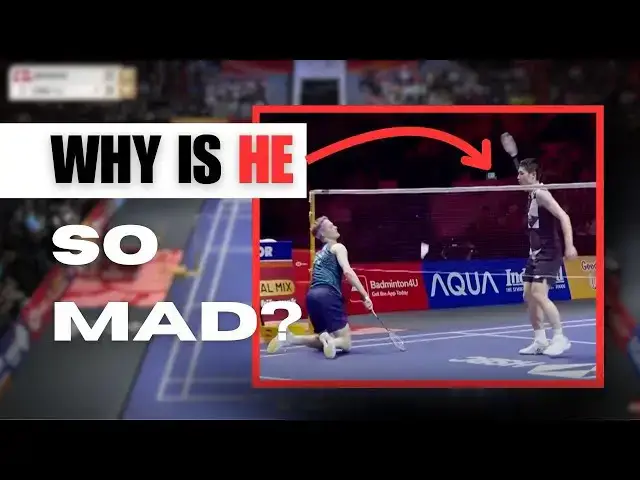
For example, one psychological tactic he
6:46
used was to look at the umpire after
6:48
every brush that Cho made. And a fault
6:50
that was called on Cho was ultimately
6:52
what made him so mad. Oh, that was
7:04
But beyond outside the game
7:05
psychological warfare, what we should
7:07
really study is Antonson's in-game
7:10
tactics that pressure his opponents
7:13
mentally. Something that stood out in
7:15
this match was how much variation Anton
7:18
had in his serve and service receive. We
7:20
saw a ton more flick serves in this
7:22
match than we normally see in men's
7:23
singles. And Antonson did an amazing job
7:26
switching between slow and fast-paced
7:29
shots. This variation in gameplay forced
7:32
Cho to continuously think about what he
7:33
needed to do and at times even angered
7:36
him and made him play out of his norm.
7:38
Just take a look at these two successive
7:41
rallies. Antonson plays the first one
7:44
with a driver receive. Then on the next
7:46
one, he moves fast like he was about to
7:49
do the same, but suddenly goes for a
7:51
deception and net. You can imagine what
7:54
was going through Cho's head. The fast
7:57
pace in the first rally probably made
8:00
Chiao think that he needs to be ready
8:02
for a faster paced rally. And when he's
8:05
thinking about preparing for the fast
8:06
rally, it's easy to forget to prepare
8:09
for the slower pace as well. It's a
8:11
similar idea with service variation.
8:13
Antonson frequently mixed up his serves,
8:15
which puts pressure on show right before
8:17
the rally even starts. Flick serves in
8:19
particular also tend to annoy opponents
8:21
the most, especially when they're caught
8:23
by it. This extra frustration can make
8:27
one lose focus and even get angry.
8:29
There's some feeling that Antonson did
8:31
have that effect in this game against
8:32
Cho. And you can ask yourselves as you
8:38
did Chu really want to flick in his
8:40
strategy or was he just trying to get
8:45
Good lift from Antonson.
9:06
Overall, this match was an excellent
9:08
demonstration of the importance of
9:09
strategy and tactics in bad mitten.
9:12
This is not just a sport where you can
9:14
outmuscle and outrun your opponents. You
9:17
have to be smart about your gameplay if
9:19
you want to win consistently. Anders
9:21
Anton demonstrated great strategy with
9:23
lots of good intent behind every shot he
9:25
played while Chotian Chen ultimately did
9:28
not put as much thought into his
9:29
gameplay. Both are still amazing
9:31
players. However, and for us badminton
9:35
players ourselves, we should seek out
9:37
the good from each player and avoid
9:39
having the same problems. If you like
9:42
this video, make sure to hit the like
9:44
and subscribe button so you don't miss
9:47
out. Let us know in the comment section
9:49
below what you would like to see next.